
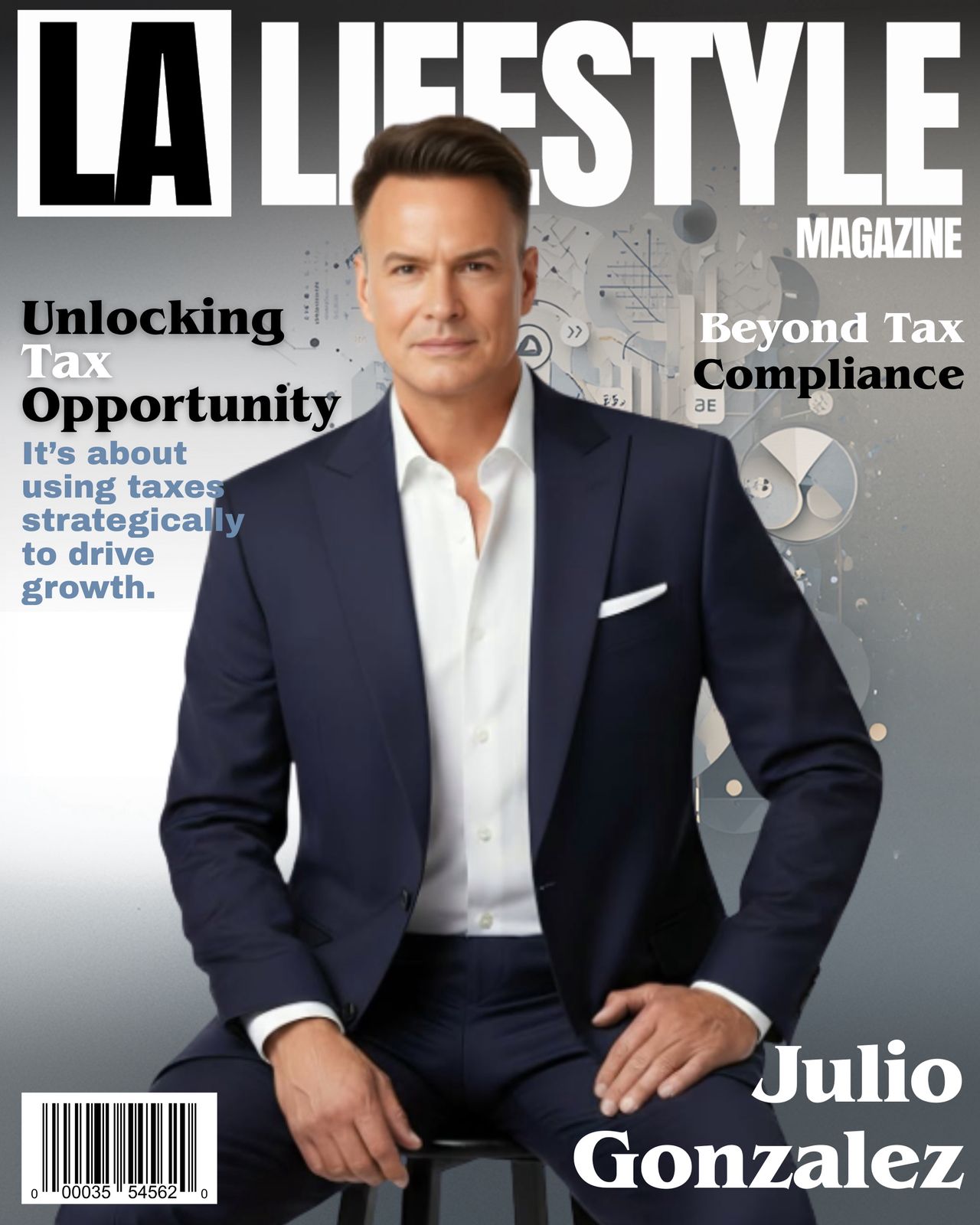
Julio Gonzalez is a nationally recognized tax strategist and reform advocate known for reframing the way entrepreneurs think about the U.S. tax system. Rather than viewing taxes as a compliance burden, Gonzalez emphasizes their intended role as a behavioral framework—designed to incentivize hiring, investment, research, and long-term economic growth. With decades of experience advising business owners, he focuses on proactive tax strategy, education, and aligning financial decisions with the incentives embedded in the tax code. His work centers on empowering entrepreneurs to move from reactive reporting to intentional planning, positioning tax knowledge as a catalyst for sustainable expansion and broader economic participation.

Interviewer: Julio, many people approach taxes with frustration or distrust. You seem to view them very differently. Why is that?
Julio Gonzalez: I think taxes have been misunderstood for a long time. Most people see them as a burden, but the tax code was actually designed as a tool. It’s meant to guide behavior, encourage innovation, and support economic growth. The problem isn’t the system itself—it’s that most people were never shown how to use it properly.
Interviewer: You’re widely known as a tax reform expert. What do you believe business owners misunderstand most about taxes?
Gonzalez: The biggest misconception is that taxes are something you deal with after everything is done. Most business owners look backward—they report what already happened and move on. But the tax system was created to influence decisions before they’re made. When you only engage with it in hindsight, you miss its real value.
Interviewer: How should entrepreneurs be thinking about taxes instead?
Gonzalez: Taxes should be part of an ongoing strategy, not a once-a-year obligation. The tax code rewards certain actions like hiring, investing, building, and researching. Those incentives are there all the time, but many businesses never claim them because the system feels intimidating or overly complex.
Interviewer: You often talk about avoidance. Why does that happen?
Gonzalez: When people don’t understand something, they avoid it. And with taxes, avoidance is expensive. Businesses don’t lose opportunities because they don’t qualify—they lose them because they’re unsure. Education changes that. Once people understand how the incentives work, the fear disappears.
Interviewer: The tax system is often criticized for being overly complicated. Do you agree?
Gonzalez: It is complex, but complexity doesn’t mean unfair. It means layered. And layered systems require guidance. The same rules apply to everyone, but outcomes differ based on awareness. Large companies invest heavily in understanding the system. Smaller businesses often assume those strategies aren’t meant for them—and that assumption costs them.
Interviewer: How does this gap in understanding affect economic opportunity?
Gonzalez: Knowledge creates momentum. Businesses that understand the tax code tend to grow faster, while those that don’t often feel stuck, even if they’re doing everything else right. Taxes affect cash flow, hiring, and expansion decisions. If you don’t understand that influence, you’re making critical choices without the full picture.
Interviewer: What changes when business owners gain clarity around tax strategy?
Gonzalez: You see a shift from reaction to planning. Businesses move out of survival mode and into growth mode. Guesswork is replaced by confidence. Owners stop second-guessing and start making intentional decisions.
Interviewer: How does your approach differ from traditional tax advice?
Gonzalez: I focus less on one-time savings and more on behavior over time. Tax strategy isn’t just about reducing a bill—it’s about how business owners think. When they understand how incentives align with growth, they invest earlier, plan longer, and operate with more purpose.
Interviewer: In your view, how does the tax code shape the broader economy?
Gonzalez: Quietly, through everyday decisions. Not through headlines, but through choices businesses make daily. Educated businesses make bolder, smarter decisions, and those decisions compound. That’s how the tax code really influences the economy.
Interviewer: You’re careful when discussing tax reform. Why is that?
Gonzalez: Because this isn’t about exploiting loopholes or cutting corners. The system already rewards the behaviors we want in the economy. The issue isn’t the rules—it’s who understands them. My work is about alignment, not shortcuts.
Interviewer: Where do you believe real reform begins?
Gonzalez: It starts with understanding. Legislation matters, but education matters just as much. When entrepreneurs feel empowered to ask better questions, they make better decisions. That’s where real change begins.
Interviewer: Finally, how do you personally define the purpose of taxes?
Gonzalez: Taxes are about participation. When people feel locked out of the system, they disengage. When they understand it, they participate fully. My goal isn’t to oversimplify the tax code—it’s to make it accessible so opportunity isn’t limited by awareness.
Interviewer: And what future do you see if that happens?
Gonzalez: A future where more businesses grow, more people invest, and the economy benefits from understanding rather than exclusivity. Clarity opens doors—and once those doors are open, momentum follows.
Leave a Reply