
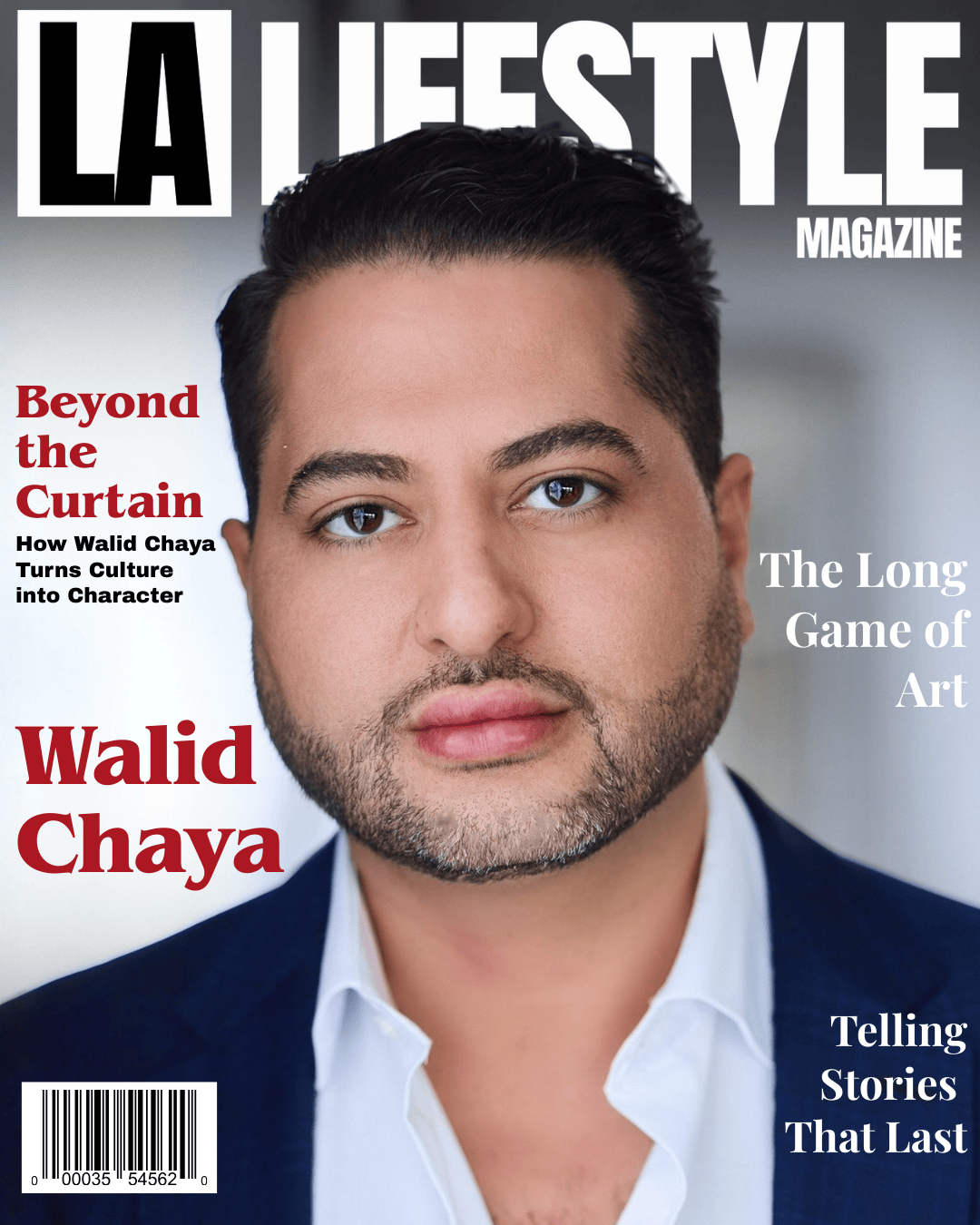
Interviewer: Walid, your connection to storytelling began remarkably early. Can you take us back to the moment that first sparked your creative path?
Walid Chaya: I was five years old when my grandparents took me to see a musical adaptation of Romeo and Juliet by Fairuz and the Rahbani Brothers in a small Lebanese town. After the performance, I went backstage and saw how everything worked—the performers, costumes, lights, and movement. I realized that emotion is something that’s carefully built. That moment stayed with me and quietly set me on the path toward acting and directing.
Interviewer: You grew up between Lebanon and the United States. How did living between cultures influence your artistic perspective?
Walid: It taught me empathy and awareness. Being American in Lebanon and Lebanese in America made me very conscious of identity and belonging. Storytelling became my way of exploring shared human experiences. Whether I’m acting, writing, or directing, I approach stories through that lens of connection rather than difference.
Interviewer: When did performing evolve from interest to intention?
Walid: School theater played a major role. From elementary through high school, I was always involved in productions. That led me to pursue conservatory-style BFA training, where discipline and preparation became essential to my craft.
Interviewer: The transition from training to industry can be challenging. What did that period teach you?
Walid: Patience and resilience. Auditions, rejections, and limited access are part of the journey. Instead of seeing them as setbacks, I treated them as lessons. They prepared me not just to work as an artist but to lead and create opportunities.
Interviewer: You’ve built multiple platforms alongside your creative career—Moonlit Wings Productions, Studio for Performing Arts LA, and the Studio for Performing Arts Foundation. What does each one do, and how do they work together?
Walid: Each platform plays a specific role within one connected ecosystem. Moonlit Wings Productions is my creative banner, where I develop original film, theatre, and live storytelling projects as a writer, director, and producer. Studio for Performing Arts LA is our training hub, offering programs and classes for young performers and emerging artists that focus on craft, discipline, and real-world industry readiness. The Studio for Performing Arts Foundation, our nonprofit arm, ensures access through scholarships, community programs, and outreach initiatives.
Together, they create a full pipeline—original work, intentional training, and community access—allowing storytelling to be both artistically driven and socially impactful.
Interviewer: How would you describe your leadership style as a director and educator?
Walid: I believe collaboration thrives when paired with discipline. That mindset comes from my parents, who emphasized preparation and consistency. On set and in the classroom, I value respect, focus, and shared responsibility. When everyone feels supported and prepared, creativity flourishes.
Interviewer: Moonlit Wings Productions is your creative home for original work. What kinds of stories are you developing through the company?
Walid: Moonlit Wings Productions focuses on character-driven film, theatre, and live storytelling that explores identity, culture, and human connection. Many of our projects blend humor and emotional depth while challenging familiar narratives, particularly around underrepresented communities. It’s a space where I can build original IP and tell stories with intention and longevity.
Interviewer: Studio for Performing Arts LA works with both young performers and emerging professionals. What programs or classes do you offer, and what sets your training apart?
Walid: Studio for Performing Arts LA offers structured classes, master classes with industry guests, and professional training for youth, teens, and adults. Our approach emphasizes craft, discipline, and preparation for real industry demands—not shortcuts. We focus on long-term development, helping performers build strong foundations and sustainable careers.
Interviewer: You’ve also created ebooks and educational tools for actors. Why was it important to expand beyond in-person training?
Walid: Not every artist has access to consistent training or mentorship, so the ebooks allow me to share practical tools more widely. They’re designed for instant download and support actors at different stages—whether they’re preparing for auditions, developing scenes, or navigating the industry with greater clarity and confidence.
Interviewer: You also host the Lights Camera Conversation podcast. How does that platform fit into your broader vision?
Walid: The podcast allows for honest dialogue. It’s a space where artists and industry professionals can speak openly about their experiences. It’s another way of storytelling—one rooted in conversation, reflection, and connection.
Interviewer: What projects are currently at the forefront of your work?
Walid: I’m developing several film and television projects, including my feature film Crazy Rich Arabs. It’s a project that blends humor with emotional depth while challenging stereotypes. I’m also continuing to expand our training programs and mentor emerging talent.
Interviewer: Representation is a consistent theme in your work. Why is it so important to you?
Walid: Representation shapes how people are seen and understood. For a long time, Middle Eastern narratives were limited or misrepresented. I believe in telling authentic stories that reflect real human experiences. When stories are honest, they resonate universally.
Interviewer: Looking back, what has this journey taught you about success?
Walid: That it takes time. This career is a marathon, not a sprint. Growth happens gradually. I always encourage artists to take thoughtful risks, stay prepared, build relationships, and remain hopeful, even when progress feels slow.
Interviewer: Finally, how would you like your work to be remembered?
Walid: I hope to be remembered as someone who built bridges—between cultures, communities, and people. Through acting, directing, writing, producing, teaching, and conversation, my goal has always been connection. Shared humanity is the foundation of every story I tell.
Interviewer: For readers inspired by your work, what’s the best way to connect or get involved?
Walid: A great place to start is by connecting with me on Instagram at instagram.com/walid.chaya, visiting studioforperformingarts.com to learn more, and subscribing to the Lights Camera Conversation podcast wherever you listen. Whether someone wants to train, learn, listen, or simply follow the work we’re producing, there are many easy ways to begin a connection.
Image credit: Anthony Mongiello Photography
Leave a Reply