

Where Creativity and Curiosity Began
Some careers are built within a single profession, while others emerge at the intersection of multiple disciplines. For filmmaker, healthcare strategist, and creative leader Yasmine Ghorayeb, cinema, science, leadership, and cultural heritage are not separate pursuits but interconnected ways of understanding people, preserving memory, and creating meaningful change.
Her work reflects a lifelong fascination with the stories that shape individuals and societies, blending artistic expression with analytical thinking. Whether behind a camera, contributing to healthcare initiatives, or exploring questions of identity and history, Ghorayeb approaches each endeavor with the belief that every experience offers another perspective through which to better understand the world.
From an early age, she was encouraged to view knowledge without rigid boundaries. Her mother introduced her to painting and visual expression, while her father fostered intellectual curiosity through conversations that moved effortlessly between literature, economics, science, philosophy, and cinema. In their home, creativity was never considered separate from critical thinking but rather another way of exploring the complexity of human experience. Between them, she developed a fluency in moving between analysis and imagination that would later define much of her work.
“I grew up in a family where art was never treated as decoration, but as a way of understanding the world,” she reflects. “That is a privilege I never take lightly.”
A Family Legacy Rooted in Cinema
Her older brother shaped that world in quieter ways. As children, they bonded over cinema, music, and storytelling. Cinema became a shared language through which imagination, humor, and memory quietly took shape. Today, her brother, a guitarist and composer, remains one of her deepest creative influences.
Cinema was part of her family history long before she ever stepped behind a camera. Her mother’s grandfather, Nicolas Cattan, belonged to the generation that helped shape the golden age of cinema in the Levant – a vanished era when Beirut stood as one of the cultural capitals of the Arab world, radiant with elegance, music, and artistic ambition. As co-founder of the original Empire cinema circuit across Lebanon and Syria, he belonged to a generation that helped shape moviegoing culture in the Levant.
Together with Georges Haddad, he helped expand the Empire, Royal, and Majestic cinema circuits across Lebanon and Syria, helping establish moviegoing as a defining cultural ritual throughout the Levant. These theaters became cultural landmarks where audiences gathered to dream in the dark and encounter the wider world through beams of light. Alongside a network of hotels and businesses, Nicolas Cattan helped shape the collective memory of a cosmopolitan era that still lingers in Beirut’s cultural imagination.
Long before formally researching this legacy, Ghorayeb found herself naturally drawn toward filmmaking and the role cinema plays in preserving collective memory.

Finding Inspiration Through Global Cinema
Among the filmmakers who have most influenced her artistic perspective are Wong Kar Wai, Yasujirō Ozu, and Akira Kurosawa. Their ability to communicate emotion through silence, visual composition, and subtle storytelling continues to shape her own creative philosophy.
Her exploration of Lebanese cinema deepened her appreciation for film as a historical record, preserving moments that might otherwise disappear with time. She believes cinema offers more than entertainment – it provides insight into identity, resilience, and the emotional landscape of a society.
Few countries have endured so many layers of disruption, yet film has preserved traces of places, identities, and ways of life that might otherwise have disappeared. Through the work of filmmakers such as Maroun Baghdadi, Philippe Aractingi, Ghassan Salhab, Joana Hadjithomas and Khalil Joreige, cinema became a powerful lens through which to encounter Lebanon – its wars and transformations, its fractured memories, and its shifting sense of identity and place. Through cinema, she found not only a record of the country’s history, but a deeper understanding of its collective psyche: its resilience and contradictions, its relationship with exile and belonging, and the enduring pull of home.
Travels throughout Japan, China, and Singapore further broadened her understanding of Asian artistic traditions and enriched her cinematic vision.
That sensibility extends to Japanese and Hong Kong cinema, where meaning often resides in what remains unsaid. Influenced by Ozu, Kurosawa, and Wong Kar Wai, she is drawn to restraint, rhythm, and emotional precision.
Bringing Science and Strategy Together
While storytelling became one pillar of her career, science provided another. Ghorayeb studied biology and pharmacology at McGill University before completing a Global Executive MBA through Columbia Business School and London Business School.
Working on healthcare localization initiatives aligned with Saudi Arabia’s Vision 2030 reinforced the importance of thoughtful leadership, collaboration, and strategic decision-making. She learned that behind every policy, system, and organizational challenge are people whose lives are directly affected by its outcomes.
That experience reinforced a recurring principle in her work: complexity is not a barrier to action, but part of leadership itself.
It also deepened her understanding of grit: not determination sustained for a day, a difficult month, or even a year, but the passion and fierce perseverance required to remain committed to a meaningful goal over the long term. When progress is slow, setbacks accumulate, and obstacles repeatedly demand recalibration, leadership becomes an exercise in endurance – the discipline to keep moving forward, year after year, without losing sight of why the goal mattered in the first place.
These experiences strengthened her belief that leadership requires balancing analytical thinking with empathy and long-term vision.
Filmmaking – especially editing – taught her that clarity often emerges through subtraction. The same principle applies to leadership: knowing what truly belongs, and having the discipline to let the rest fall away. In both, discernment is as important as creation.
Preserving Memory Through Documentary Filmmaking
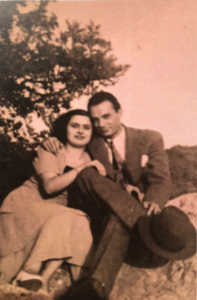
One of Ghorayeb’s most personal creative projects explores the lives and legacy of her grandparents. Rather than following a traditional documentary structure, it moves through fragments: how presence lingers after absence, and what refuses to leave.
There is no chronology. Photographs, music, gestures, and fragments of Beirut’s golden era drift through the film: gestures suspended in silence, echoes of Asmahan, the Rahbani Brothers, Les Caves du Roy – a Beirut lingering like the faint scent of jasmine her grandfather once loved. What emerges is not biography but atmosphere – something felt rather than explained.
Some memories are remembered. Others are dreamt back into being.
She credits much of the film’s emotional depth to editor Deena Charara, whose documentary storytelling helped shape its narrative, and Nadeem Ghanem of Caustik Studios, whose animation transformed memories into vivid visual experiences.
Filmmaking, for her, remains fundamentally collaborative. She holds a deep and profound respect for actors, cast and crew members, and for the craft, discipline, and vulnerability each person brings to a film. She speaks with deep gratitude for the trust, loyalty, and creative rigor of the artists and experts she has worked alongside. For her, it is precisely this convergence of talents, perspectives, and sensibilities that allows something greater than any individual contribution to emerge.
Creative Partnerships Built on Shared Vision
That collaborative spirit continues through her work with childhood friend, singer, and actress Romy Mouzannar. Together they created a cinematic interpretation inspired by Barbara’s classic song Ma plus belle histoire d’amour, c’est vous, reimagined through an Arabic musical arrangement by acclaimed singer and composer Mike Massy.
Their collaboration explores themes of memory, belonging, and emotional connection while demonstrating the creative possibilities that emerge when lifelong friendships evolve into artistic partnerships.
At its heart is a meditation on longing, exile, and belonging – and the ways people and places continue to inhabit us long after we’ve left them behind.

Leadership Beyond the Camera
During her Global Executive MBA, Ghorayeb directed another documentary examining innovation, entrepreneurship, sustainability, and leadership across multiple countries.
While filming, an unexpected experience during Carnival in Rio de Janeiro reshaped her perspective. Observing people brought together through celebration reminded her that behind every organization and institution are individuals with unique dreams, fears, and aspirations.
She believes leadership, much like directing, is about creating environments where people feel supported, trusted, and inspired to contribute their best work.
Leadership, at its most essential, may simply be the ability to hold the frame while everything else is still becoming.
Some of her most formative leadership lessons emerged not from institutions alone, but from moments when trust was tested. These experiences sharpened her understanding of authorship, attribution, and the often invisible damage the appropriation of ideas can inflict. The deeper wound is not only the act itself, but the erosion of trust that follows when access eclipses authorship. Perhaps most difficult is recognizing one’s imprint on something no longer within one’s stewardship.
There is a particular violence to creative erasure: a form of creative amputation that severs an idea from the person who conceived it, preserving the creation while erasing the creator. What cannot be replicated, however, is the sensibility that gave rise to it.
The Human Side of Directing
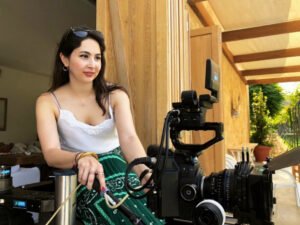
Ghorayeb has developed a deep appreciation for actors and the remarkable process through which they bring fictional characters to life. She views directing as an exercise in listening as much as leading, creating an environment where performers can explore vulnerability, creativity, and emotional authenticity.
For her, the strongest productions emerge through mutual respect, open collaboration, and a shared commitment to excellence.
“What draws me to directing is its constant reinvention. One moment you’re alone with a blank page; the next, you’re navigating the beautiful chaos of a film set. I love the challenge of turning the invisible into something tangible. But the real magic happens when talented people come together, surprise themselves, and create something greater than any one of them could have imagined alone,” Yasmine reflects.

Character, Resilience, and Purpose
Over time, Ghorayeb came to understand resilience less as the ability to endure adversity than as the ability to emerge from it without surrendering one’s integrity, compassion, or capacity for discernment.
Repetition can lend distortion the appearance of truth. Masks require maintenance. Truth does not.
She came to appreciate how readily stories can acquire a life of their own when repeated by those who neither witnessed nor questioned their origins. Yet she also witnessed many choose integrity once confronted with the human consequences.
A false narrative can behave like a slow poison: introduced quietly, carried from one voice to another, until it seeps into what is most sacred – families, relationships, institutions, and one’s sense of belonging. Its violence is cumulative rather than immediate, gradually eroding a person while corroding the trust of those closest to them.
Like any poison left to circulate unchecked, its reach can extend far beyond its original target, contaminating perception until reality itself becomes difficult to recognize.
Its damage rarely belongs to its originator alone. What begins with one source can acquire many carriers: those who repeat it, those who lend it credibility, and those who recognize the harm yet look away or choose the comfort of silence. When harm is knowingly allowed to continue, silence and inaction can become forms of complicity.
Yet poison does not change the nature of what it attacks. Falsehood may shape perception and fracture trust. Falsehood has the advantage of speed; truth, endurance.
Pain may explain certain behaviors; it does not absolve the harm they leave behind. Adversity does not shape character in a single direction. Adversity does not shape character in a single direction. For some, it becomes a reason to repeat harm; for others, to ensure it ends with them.
Her grandfather Joseph Ghorayeb remains one of her most enduring influences, defined by dignity, humility, and quiet nobility.
His presence shaped the people and places around him, perhaps most visibly in his village, Damour. What endured was not simply what he built, but what he left in others. He gave without framing it as giving. His example continues to shape how she thinks about generosity, leadership, and character.
For her, this is less about memory than transmission – the quiet ways in which a life continues beyond itself: through values carried forward, gestures passed between generations, and forms of grace we inherit without ever being taught.
She also credits her father with instilling the values of intellectual curiosity, ethical responsibility, and thoughtful judgment – principles that continue to guide both her personal and professional life.
As her father often reminded her through Shakespeare’s Hamlet: “Give every man thy ear, but few thy voice; take each man’s censure, but reserve thy judgment.” And, above all: “To thine own self be true.”
She also considers herself fortunate to have friendships defined by extraordinary loyalty – the kind that endure adversity, protect one’s name, and prove their worth when it matters most.
Bullying is not confined to classrooms; it resurfaces wherever power eclipses principle – in social circles, creative industries, workplaces, and boardrooms. In adulthood, its forms may be quieter but no less consequential: exclusion, intimidation, doors quietly closed, and authority wielded to diminish rather than empower.
She came to understand that stewardship can give way to control when power ceases to be balanced by accountability. When authority and access become concentrated in too few hands, voices can disappear from the spaces where decisions are made, while what generations worked hard to build can drift beyond their reach.
There are few experiences more disorienting than watching the fruits of generations of sacrifice, discipline, and fierce determination remain visibly intact, while access to what took decades to build vanish almost overnight. Power without accountability may control access, institutions, or assets for a time; it cannot manufacture legitimacy.
Power can obstruct the truth, bury it for a time. It cannot erase it. Truth has an inconvenient permanence: eventually, it surfaces – and accountability follows.
Integrity, she came to believe, does not require constant performance or defense. She discovered that freedom begins where the need for approval ends – and deepens when fear, intimidation, or the expectations of others no longer determine the boundaries of one’s life.
The distinction stayed with her: reputation may be shaped by perception, but character reveals itself through what endures.
Building a Legacy Across Disciplines
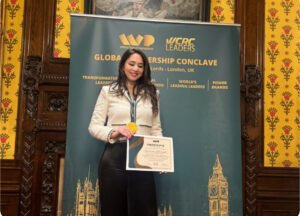
Recognized among MSN’s Women Power Leaders 2026 and the 100 Global Power Leaders honored at the House of Lords in London, Ghorayeb views recognition not as an endpoint but as a reminder of the responsibility that accompanies influence.
As a third-generation contributor to a family legacy in pharmaceuticals, Ghorayeb views inheritance less as succession than as stewardship.
For her, the deeper measure of leadership is not how indispensable one becomes, but whether what one builds is worthy of enduring – grounded in purpose and values capable of transcending any one individual.
Whether directing films, contributing to healthcare initiatives, or exploring new creative collaborations, her work reflects a commitment to preserving meaningful stories while inspiring thoughtful dialogue across disciplines.
For Yasmine Ghorayeb, the questions remain larger than the answers. The frame remains unfinished.
Leave a Reply